Showing posts with label Archimedes Russell. Show all posts

Saturday, November 1, 2014

Archimedes Russell: Crouse College at Syracuse University

Archimedes Russell, Architect
Built 1888-80
Nighttime pictures push the limits of my little camera.
I will return during daylight hours to explore 
this astonishing building inside and out. 

Saturday, July 19, 2014

Saturday, July 5, 2014

Archimedes Russell: Third National Bank

Archimedes Russell's name comes up at least as often as Ward Wellington Ward's name does in a survey of historic buildings here in the city of Syracuse. Ward and Gustauv Stickley are probably more famous and admired. Still Russell and his contemporaries created a legacy of monumental buildings that has endured. 

Russell was born in 1840 in Massachusetts and began his career apprenticing to John Stevens in Boston. Schools of architecture were few and expensive. For Russell apprenticing was the only path to learning the art and craft of designing buildings.

By 1862 Russell had moved to Syracuse, home to his wife's family, and began working as an apprentice for Horatio Nelson White, already a well known architect here. Contemporaneous with them was Joseph Lyman Silsbee.

He left White’s office in 1868 to set up his own practice. During that time, post-Civil War Syracuse's population grew and businesses prospered. Russell and his contemporaries were busy. Russell drew up 800 commissions (not all of which were built), and taught architecture at Syracuse University at a time when most architecture was still being taught on the job.

Russell employed Asa L. Merrick from 1870 to 1877, and Charles E. Colton worked for him from 1875 to 1878. They too built their own firms after working for Russell.

Russell hired Melvin L. King in 1889 and made him a partner in 1906 as Russell began to retire. That trajectory leads directly to King + King, a highly respected architectural firm in Syracuse today.

As I look for Russell’s extant buildings, of which there are still many, I’m enjoying the wide range of styles he explored during his career, in an age of architectural diversity.

Here and in past and future posts is a sampler of the built legacy of Archimedes Russell and his cohorts.

Thursday, July 3, 2014

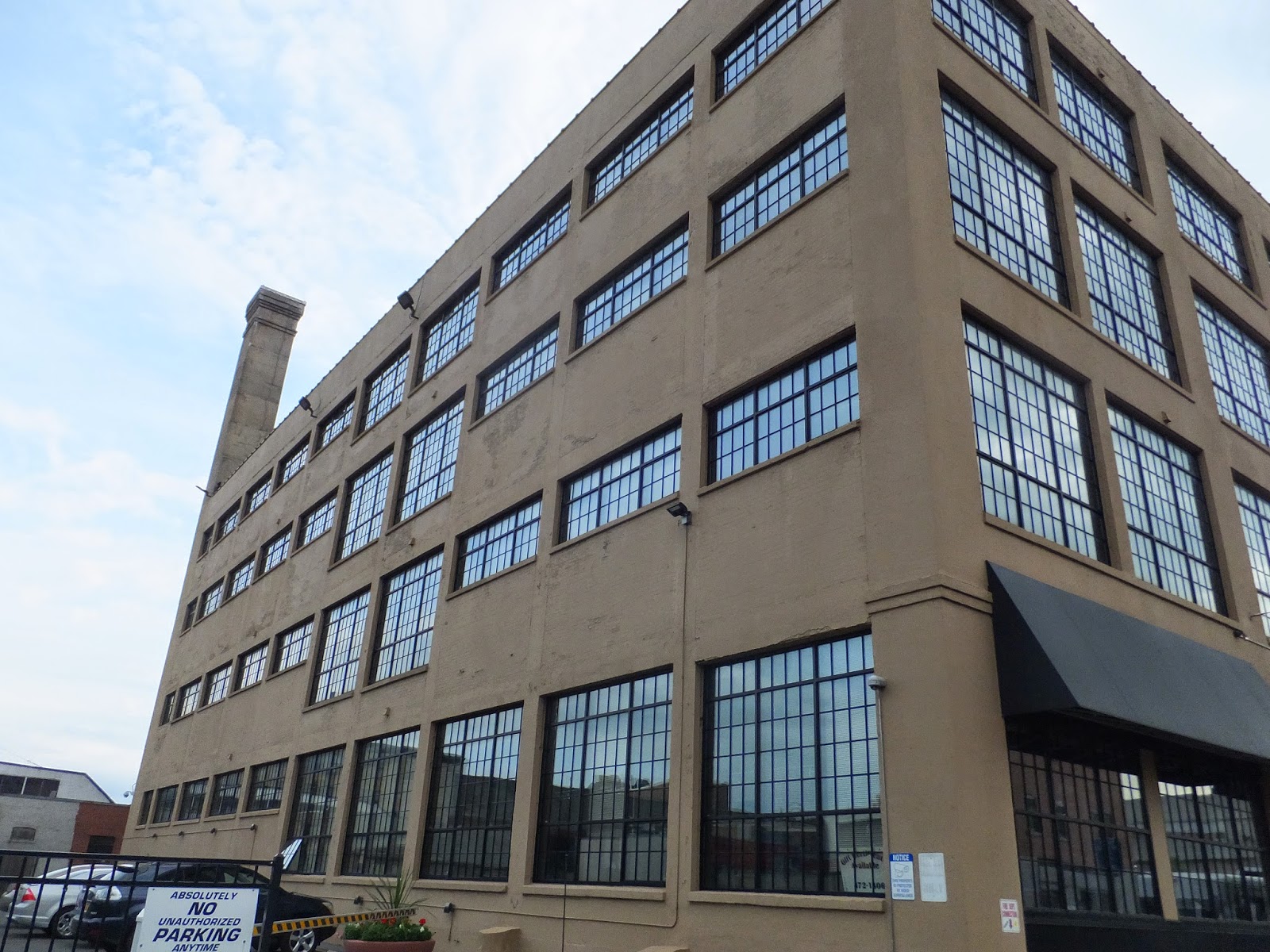
Archimedes Russell: C. W. Snow Warehouse

Built in 1913 in a light and airy modern style unheard of in Syracuse, Archimedes Russell's building then, over subsequent owners and uses, lost its exterior character and interior light. Recently it was reclaimed and made into downtown apartments.

Tuesday, July 1, 2014

Archimedes Russell: First English Lutheran Church

Archimedes Russell designed this magnificent building with his associate Melvin King in 1911 in the Mission style, a departure from his historic European earlier works. 

From the present church's website:
Our building, the last church designed by Archimedes Russell and perhaps, to a great degree, by his draftsman/associate Melvin King, is unique in the catalog of Russell-designed edifices. Where Russell worked almost exclusively in the Gothic and Romanesque Revival idioms, FEL is an imposing Ohio sandstone structure with a  red tile roof in the Mission style, filled with some of the Haskins Art Glass Factory’s finest examples of late-Victorian opalescent drapery glass.

Sunday, June 29, 2014

Archimedes Russell: One of the Two Zett Houses on Danforth St.

Archimedes Russell remains a strong architectural presence all around Syracuse a century after he reached his peak years. 
Today and tomorrow we have two important examples of his ideas about residential building. 
Fine resource for the student of local architecture and historic preservation, Sam Gruber, describes the history of this and tomorrow's post here.

Saturday, February 16, 2013

Archimedes Russell: Dey Brothers Building

In the 1950s this lovely Romanesque Revival frame for the main entrance to Dey Brothers Department Store, designed by Archimedes Russell, was covered by the most incredibly ugly facade that modernism could possibly create. A rendering of this atrocity is here at The Department Store Museum.

The restoration of downtown treasures is helping bring new life to the core of our once vibrant city.